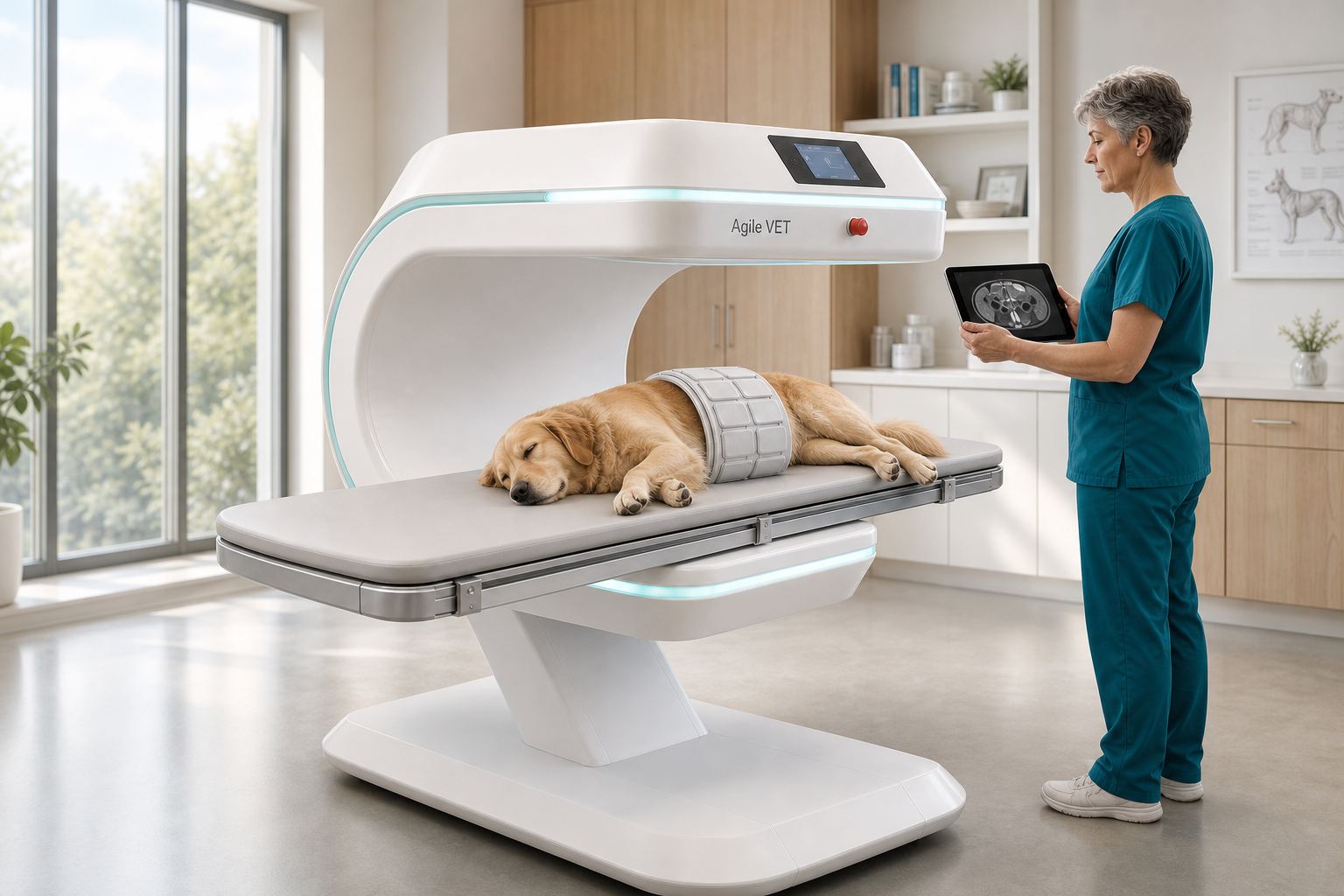
Affordable
A few hundred per scan instead of a few thousand — at least three times more affordable overall.
In development · clinical pilots open
AgileVet brings portable, diagnostic soft-tissue MRI to veterinary hospitals and large veterinary centres — no shielded suite, no cryogens, and no capital purchase.
First units expected to be available to test towards the end of 2027. Join the list and you will hear before anyone else.
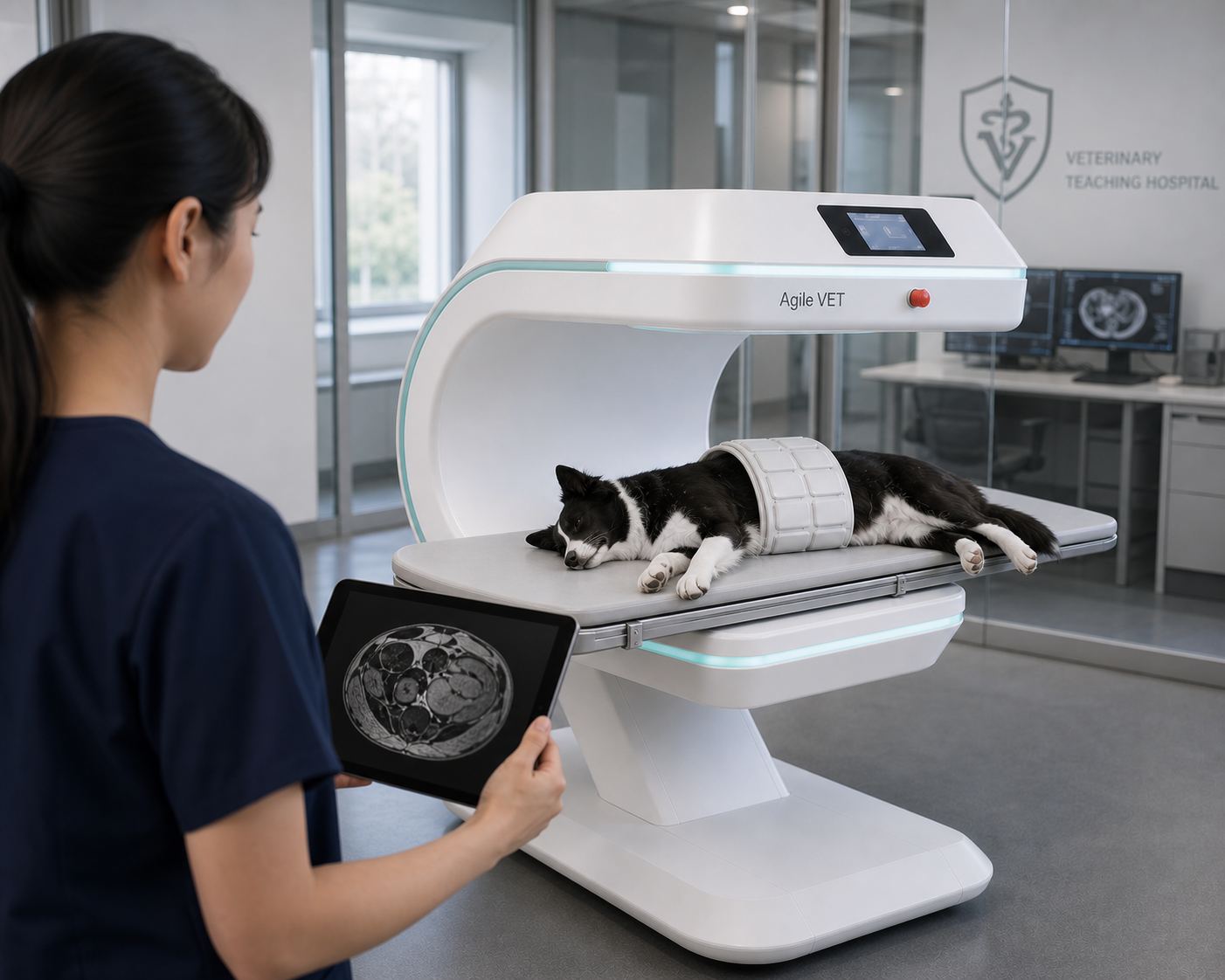
Built for hospitals and large veterinary centres, where a radiologist can read the study. It changes five things about how MRI fits there.
A few hundred per scan instead of a few thousand — at least three times more affordable overall.
A subscription — hardware, updates and support included. No seven-figure purchase.
No shielded suite, no structural build-out — it runs in the room you already have.
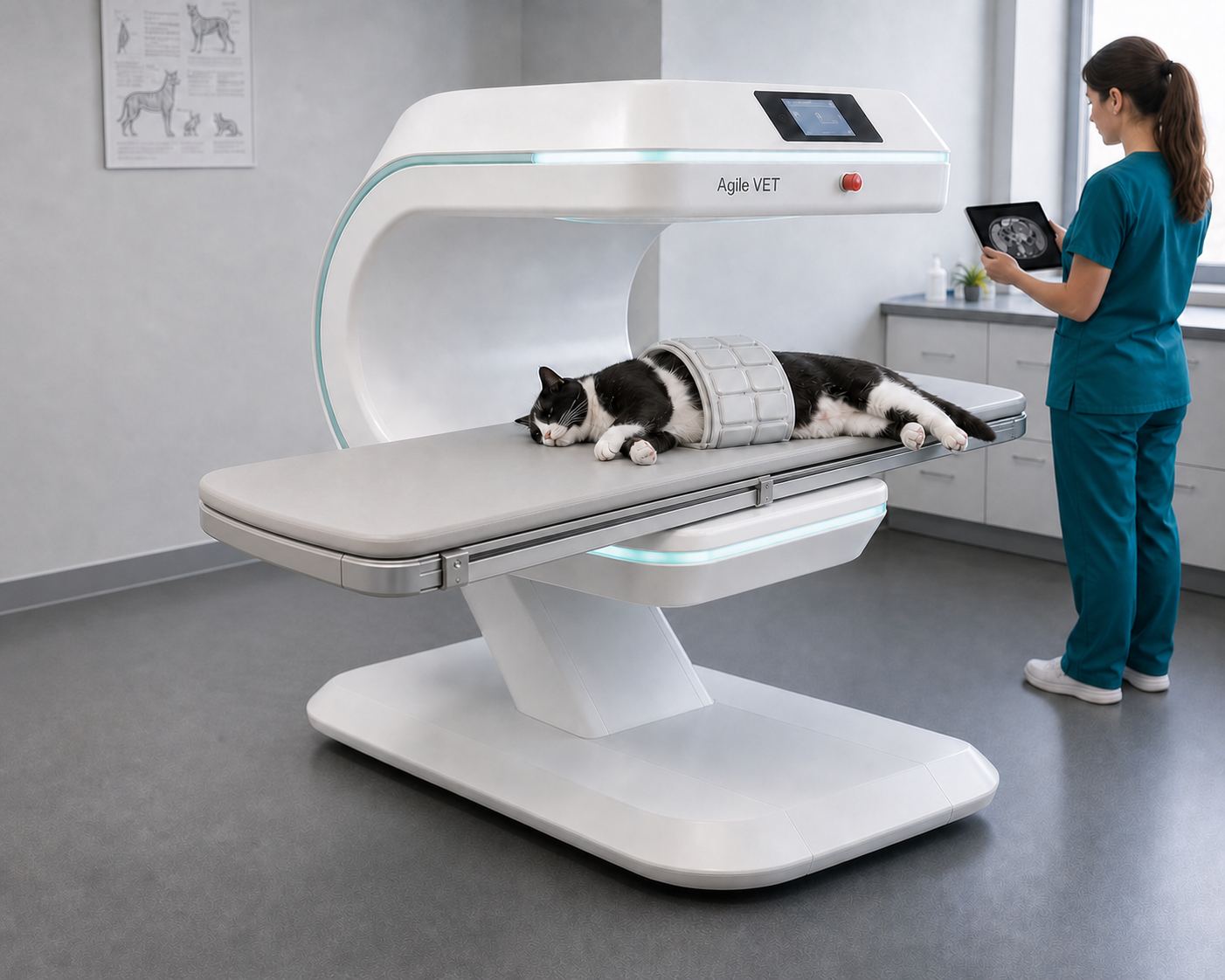
No specialised MRI operator to recruit — the radiologist runs the study at the press of a button.
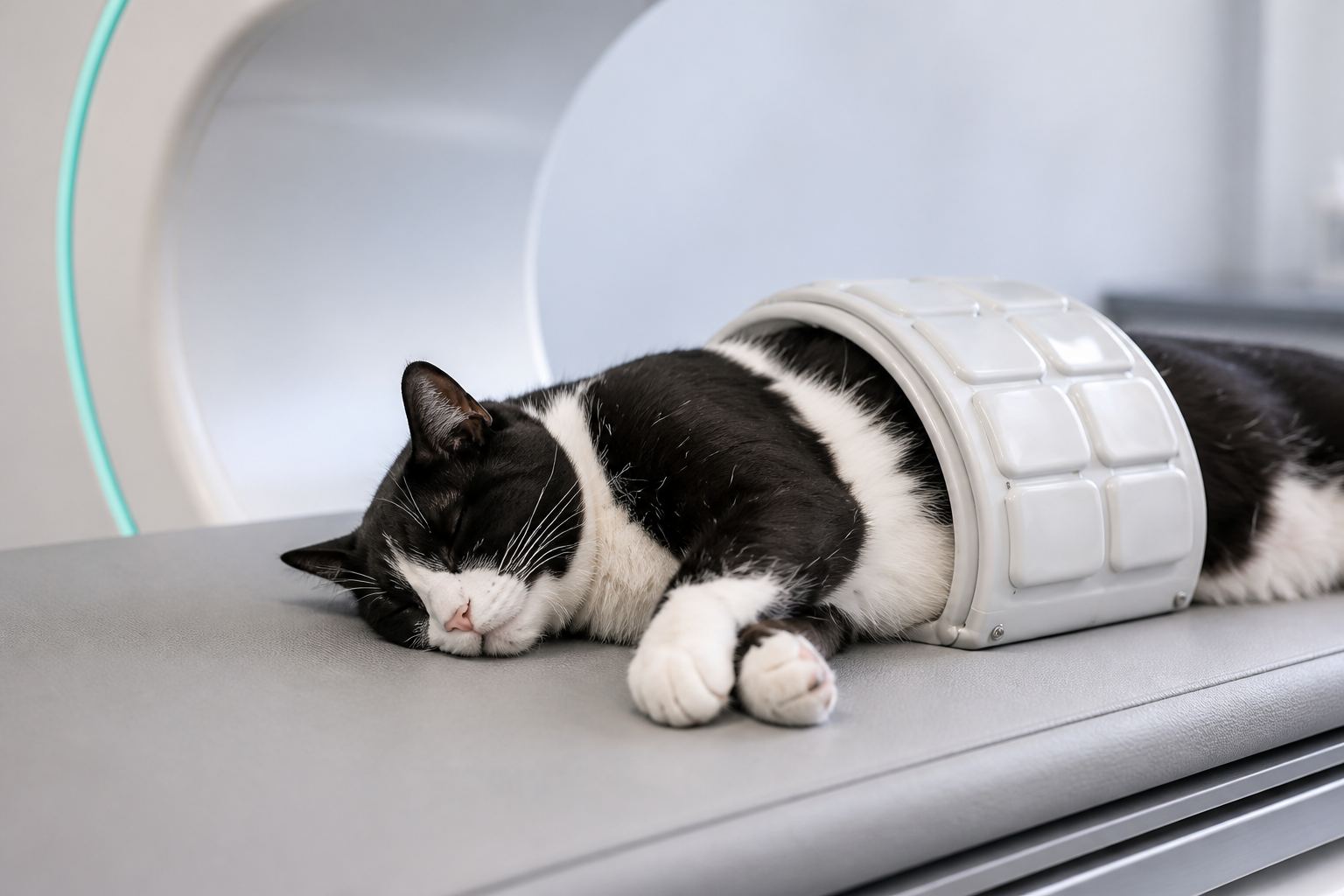
The patient stays easy to reach, with anaesthesia and monitoring right at the magnet.
Every one of them follows from the magnet.
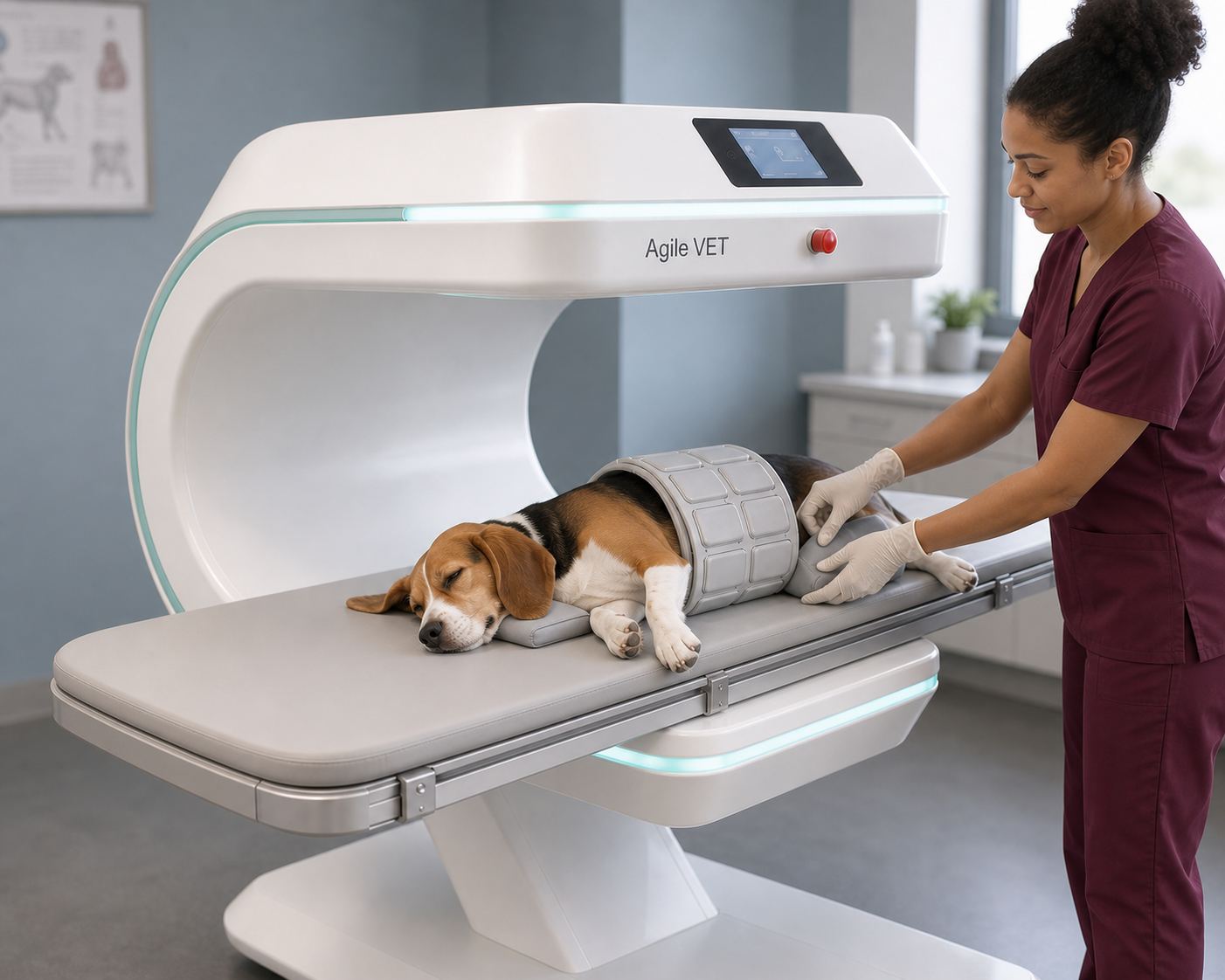
The open C-arm design keeps the patient visible and physically reachable through the whole study — anaesthesia lines and monitoring stay exactly where your team needs them.
Not because patients don’t need it — because four practical barriers stand between a sick animal and a scan. Each one is a design target for AgileVet.
Today an MRI study can cost a pet owner several thousand dollars all-in, and many clients simply decline. AgileVet targets a scan cost of a few hundred instead.
A conventional system is a six- to seven-figure purchase before the room is even built. AgileVet replaces the purchase with a pay-as-you-go subscription.
Shielded suites, cryogen plumbing and structural reinforcement turn an installation into a construction project. AgileVet is designed to run in a standard room on a standard outlet.
Conventional MRI needs a trained technician most veterinary teams don’t have. AgileVet is push-button — the radiologist runs the study directly.
Remove those four barriers and the arithmetic flips: MRI stops being a rare, referred event and becomes a study your hospital runs in-house, the same day it is indicated.
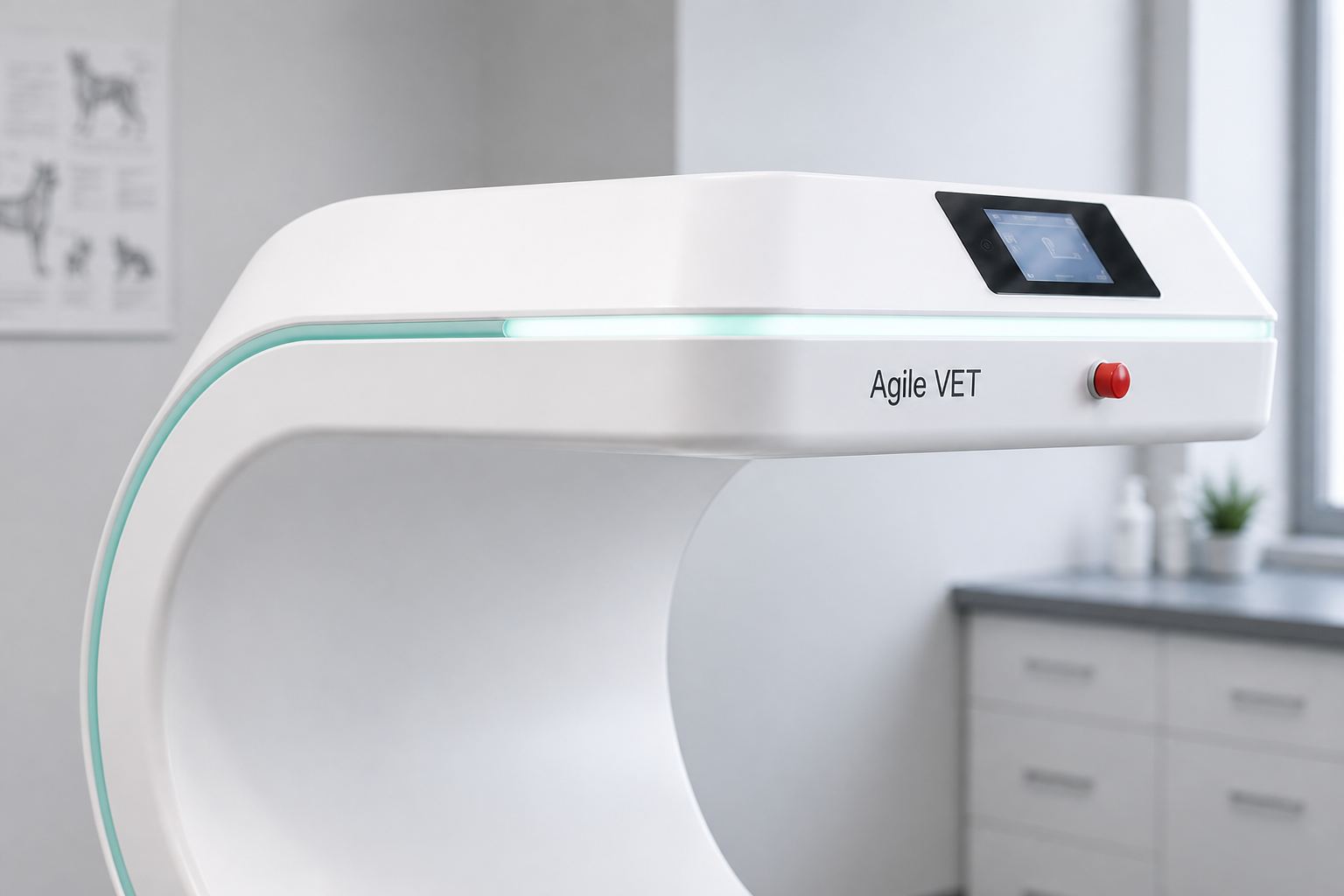 Design concept render
“I would choose MRI over CT for soft-tissue cases if the price matched.”
A university clinician · from our discovery interviews — add yours
Yes. As with any MRI, the patient must remain completely still, so companion animals are anaesthetised for the scan — AgileVet is designed to work with your standard anaesthesia equipment and monitoring sensors. What changes is everything around that: the open architecture keeps the patient visible and physically reachable throughout, a focused protocol targets roughly fifteen minutes rather than the forty-five-plus typical at referral, and the episode happens once, in your own building, instead of weeks later at a second site.
No. Conventional MRI needs copper shielding and structural retrofitting because it depends on a perfectly uniform field. AgileVet’s magnet architecture and reconstruction algorithms are designed to tolerate an ordinary clinical environment, so the system is intended to run in a standard room on a standard power outlet.
Your radiologist. AgileVet is designed for veterinary hospitals and large centres that already have a radiologist to read the study — and the workflow is simple enough that the radiologist can also run the scan directly, at the press of a button. For sites without a radiologist on staff, remote teleradiology reads can be included as part of the plan.
We expect the first units to be available to test towards the end of 2027, and we would rather tell you that plainly than imply anything sooner. The veterinary configuration is in development and the specifications on this site are design goals, not measured performance. What you can do today is join the early-access list — the people on it hear first, and the ones who tell us what they need are the ones shaping species range, patient sizes and protocols while those are still open.
A person reads it — not an autoresponder. You go on a short list that gets a few updates a year and first notice when there is something real to see or test. We do not sell or share the list, and every email carries an unsubscribe link. If you are a clinician, expect one question back: what would this have to do to be useful in your building?
The specification is still open. Leave your address and you will hear first — and tell us what the machine has to do, and that goes into the build.
First units expected to be available to test towards the end of 2027. A few emails a year, nothing else, unsubscribe any time.
Development-stage veterinary device. The AgileVet configuration is in development. It is not currently available for sale, and the capabilities, specifications, scan times and economics described on this site are design goals rather than measured performance on veterinary patients. Low-field MRI does not reproduce the image quality of a 1.5T or 3T system, and no diagnostic equivalence to high-field MRI is claimed or implied. Core patent recently allowed worldwide; other patents pending. © 2026 Agile MRI Ltd.